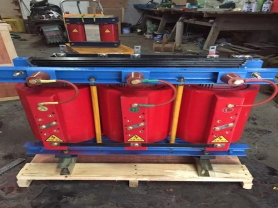
The high voltage withstand voltage tester is the basic test equipment used for AC withstand voltage tests by power plants, power supply bureaus, and scientific research units.It is lightweight, compact, and easy to move, and has passed the standards of the National Quality Supervision Bureau. It is used for insulation strength tests at specified voltages on various electrical products, electrical components, and insulating materials, assessing the insulation level of products, detecting insulation defects in test objects, and measuring the ability to withstand overvoltages.
Series
Suitable for power systems, industrial and mining enterprises, transportation, postal and telecommunications departments, scientific research units, etc., for insulation strength tests under power frequency or DC high voltage on various high-voltage electrical equipment, electrical components, and insulating materials. Product aliases: oil-immersed test transformer, oil-immersed transformer, oil-immersed high-voltage test transformer, oil-immersed high-voltage test transformer, high-voltage test transformer, power high-voltage test transformer, ultra-light high-voltage test transformer, cascade high-voltage test transformer, AC/DC high-voltage test transformer, high-voltage booster, high-voltage withstand voltage tester
Product features:
◆ Excellent material selection, reliable quality, good annual stability;
◆ Large voltage margin, low electrical noise, low partial discharge;
◆ Uses new insulation materials, compact size, lightweight. Technical parameters:
◆ Rated voltage: AC 50~400kV DC 70~420kV;
◆ Rated capacity: 1~400kVA;
◆ Product categories: AC, AC/DC, AC cascade, AC/DC cascade.
The insulated cylinder type high-voltage test transformer complete set has strong compatibility, complete voltage and capacity series, and comprehensive functions.
Variable frequency series-parallel resonant high-voltage test transformers are widely used in power, metallurgy, petroleum, chemical, and other industries, suitable for large-capacity, high-voltage capacitive test objects.
Oil-immersed High Voltage Test Transformer
Overview
It is the basic test equipment used for AC withstand voltage tests by power plants, power supply bureaus, and scientific research units. It has passed the standards of the National Quality Supervision Bureau and is used for insulation strength tests at specified voltages on various electrical products, electrical components, and insulating materials, assessing the insulation level of products, detecting insulation defects in test objects, and measuring the ability to withstand overvoltages.
Structure
The iron core of this series of products is a single-phase core type, made of high-quality cold-rolled oriented silicon steel sheets, and the fastening method uses steel as the clamping piece. The high-voltage coil is a cylindrical multi-layer tower type, wound with high-quality polyester enameled wire and high withstand voltage insulation materials. The low-voltage coil is on the outside, and the instrument coil is an independent winding, generally 100V. The shell is octagonal, and test transformers above 10KVA are equipped with movable iron wheels. It has the characteristics of light weight, small size, easy movement, and superior performance.
Working Principle
1. AC, DC:
Input the power frequency power supply into the operation box (or operation console), and adjust the voltage through the auto-transformer to input to the primary winding of the test transformer. According to the principle of electromagnetic induction, power frequency high voltage can be obtained on the secondary (high-voltage) winding. This power frequency high voltage can be rectified by a high-voltage silicon stack and filtered by a capacitor to obtain DC high voltage, whose amplitude is 1.4 times the effective value of the power frequency high voltage. However, when using DC, the short-circuit rod should be pulled out, and when using AC, the short-circuit rod should be inserted.
2. Test transformer with taps:
In order to simultaneously satisfy the contradiction between higher voltage and smaller current, and lower current and larger current, the high-voltage winding is divided into two windings, one with a larger current and the other with a smaller current, and then the two windings are connected in series and led out separately. Schematic diagram
3. Cascade test transformer:
To obtain a higher voltage test transformer, a cascade method can also be used to obtain higher voltage. Figure 2 is the principle wiring diagram of a three-stage cascade test transformer. The capacity and voltage relationship of the three transformers satisfies: P1=2P2=3P3, U(total)=1U+2U+3U.
(1) Test personnel should divide responsibilities, set the safety distance of the test site, carefully check the grounding of the test object and test transformer, and have a dedicated person to monitor safety and observe the state of the test object.
(2) Before testing the test object, all external connections should be removed, and fully discharged. The main parts should be cleaned and kept absolutely dry to avoid damaging the test object and causing errors in test values.
(3) For large-capacity test objects (capacitors, ultra-long cables, etc.), the voltage should be raised slowly during the test to prevent the charging current from being too large and burning out the microammeter. If necessary, step-by-step pressurization should be used to read the stable readings of the microammeter at each voltage.
(4) During the test, the test object, microammeter, and test device should be closely monitored. Once flashing, breakdown, or other phenomena occur, the voltage should be immediately reduced, the power cut off, and the cause investigated.
Precautions for power frequency withstand voltage test operation process
1. Test personnel should divide responsibilities, set the safety distance of the test site, carefully check the grounding of the test object and test transformer, and have a dedicated person to monitor safety and observe the state of the test object.
2. The main parts of the test object should be cleaned and kept absolutely dry to avoid damaging the test object and causing errors in test values.
3. For tests on large equipment, generally a no-load test of the test transformer should be carried out first, that is, raising the voltage to the test voltage without connecting the test object, to calibrate the indication accuracy of the instruments and adjust the ball gap spacing of the discharge ball gap.
4. When performing withstand voltage tests, the voltage raising speed should not be too fast, and sudden pressurization should be prevented, such as sudden closing when the voltage regulator is not at zero, and sudden power off should also be prevented. Generally, the switch should be opened after the voltage regulator is lowered to zero.
5. During the voltage raising or withstand voltage test, if the following abnormal conditions are found: 1. The voltage and current meter pointers swing greatly, 2. The test object makes abnormal sounds, 3. Insulation is found to be burnt or smoking, the voltage should be immediately reduced, the power cut off, the test stopped, and the cause investigated.
、
Note: The above information and technical parameters are compiled and released by Yangzhou Darui Electric Co., Ltd.